First for Schiphol: innovative technology scans waste
19 February 2026
Schiphol and Renewi take new step within the Circular Operations Programme
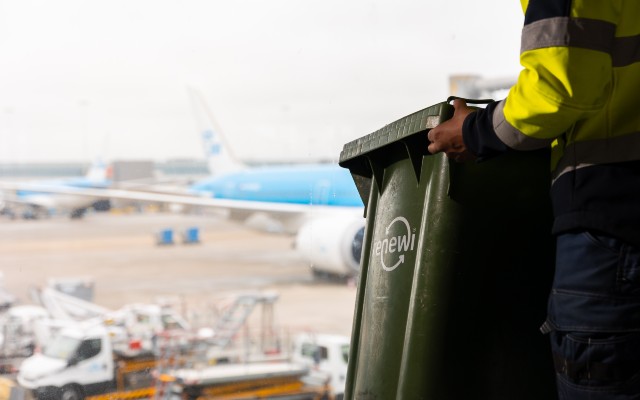
Amsterdam, 19 February 2025 – Waste-to-product company Renewi is introducing the first automatic waste scanner. Schiphol is the first customer to put this innovation into practice. The scanner provides insight into the composition of residual waste streams at product level. As part of its Circular Operations Programme, this supports Schiphol in accelerating its ambition to reduce residual waste and increase recycling rates.
Large volumes, large responsibilitySchiphol spans tens of thousands of square metres of terminals, hospitality venues and offices. This generates large quantities of waste streams, ranging from plastic packaging and orange peels to construction and demolition waste. This scale brings a clear responsibility to manage waste carefully. By 2030, the airport aims to significantly increase its recycling rate and contribute to waste reduction, lower CO₂ emissions and the preservation of raw materials.
From manual to automated scanningUntil now, all waste scans at Schiphol have been carried out manually. Although these remain important because they help raise awareness, the process is labour‑intensive and challenging to scale. Whereas manual scans took an entire day, the automatic scanner can now process three 660‑litre containers in just 45 minutes. The system also automatically generates a report, providing Schiphol immediate access to uptodate, accurate data to improve waste separation and optimise processes.
Data‑driven action to reduce residual wasteWith the implementation of the automated scanner, Schiphol now has access to extensive, detailed insights into material types, contamination levels and opportunities for reuse. This information is used to improve procurement policies - for example, by no longer purchasing materials that are difficult or impossible to recycle, preventing them from ending up as residual waste.
The data also helps optimise waste processes, inform employees and strengthen collaboration with recycling partners.
“By introducing this automatic waste scanner, we are taking an important step towards increasing Schiphol’s recycling rate,” says Naomi Landman, CCO of Renewi. “By gaining a clear understanding of the composition of waste streams, we can take more targeted action to reduce residual waste and increase highquality recycling. Innovations like this are essential to delivering on the circular ambitions of our customers.”
“At Schiphol, we are redesigning how materials flow through our airport - from procurement and retail to operations and waste processing,” says Denise Pronk, Head of Sustainability at Royal Schiphol Group. “Our circular approach focuses on avoiding unnecessary material use, choosing sustainable alternatives, extending product lifecycles and safely returning materials into the system. This reduces the amount of waste generated and lowers our CO₂ footprint. The automatic waste scanner strengthens this work by providing detailed insight into what ends up in our residual streams. This enables targeted action, strengthens collaboration with partners and drives continuous improvement across the airport.”
Accelerating together towards a circular airportWith this innovation, Renewi and Schiphol are taking a concrete step forward in their partnership towards a circular airport. By using technology to improve insight and processing efficiency, the way is paved for higher recycling rates, lower CO₂ emissions and maximum preservation of raw materials.
The innovation is being deployed at Schiphol first but can be rolled out to other customers in due course.