New EU packaging rules on the horizon, but consumers still have limited trust in green labels
02 July 2026
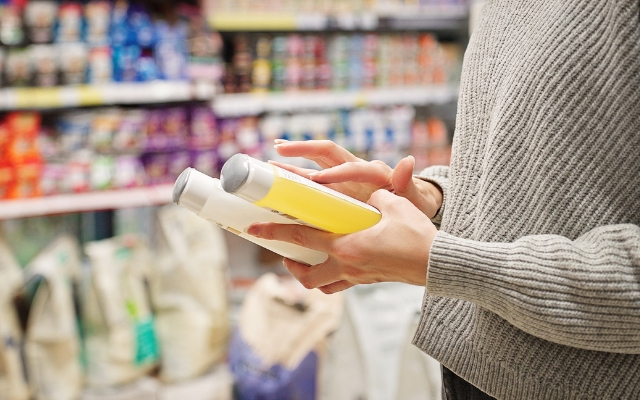
As new European packaging rules, the PPWR, are set to be introduced gradually from 2026, high expectations around circular packaging are colliding with limited consumer trust. An Ipsos survey commissioned by Renewi, the Circular Reality Scan, shows that consumers in Belgium and the Netherlands expect companies to do more with recycled materials, but recycling labels and claims have limited influence on purchasing decisions.
High expectations, limited trust
In Belgium, 90% of consumers say companies should invest more in the use of recycled materials. In the Netherlands, this figure is 86%. In both countries, 90% say companies should clearly indicate when they use recycled materials.
At the same time, trust remains limited. In Belgium, only 34% of consumers say they almost always trust recycling labels. In the Netherlands, 76% say they trust such labels only sometimes or never. Greenwashing concerns are also widespread: 90% of Belgian consumers and 89% of Dutch consumers believe many companies present themselves as greener than they really are. Companies recognise this concern themselves: 77% of companies in Belgium and 87% of companies in the Netherlands agree that many businesses make themselves appear greener than they actually are.
Recycling claims do not automatically drive purchasing behaviour
The survey also shows that labels and claims have a limited impact at the point of purchase. In a product test, consumers were shown two identical shampoo bottles with the same brand, size and price. The only difference was that one bottle carried the claim “100% recycled bottle”. This claim had no positive effect on purchase intention.
QR codes may help provide more detailed information, but their use is likely to remain limited. In Belgium, 51% of consumers say it is important that additional information is available via a QR code. In the Netherlands, this is 42%. In both countries, only three in ten consumers say they would probably scan such a code.
Recycled materials are still often seen as more expensive or lower quality
According to Renewi CEO Harld Peters, information alone is not enough. “If consumers think recycled materials are more expensive or lower quality, labels will not have the desired effect. We need to break that perception to accelerate the transition to a circular economy.”
The findings are in line with existing research on consumer behaviour.
“Purchase decisions are rarely driven by a single factor. Price, convenience, perceived quality, the availability of alternatives and the context in which people make choices all play an important role. Labels can help people make choices, but their impact cannot be viewed in isolation,” says Prof. Dr Nathalie Dens of the University of Antwerp.
Prof. Dr Ir Ruth Mugge, Professor of Consumer Behaviour & Circular Economy at TU Delft, adds: “This research confirms what we have seen for some time: a positive attitude towards sustainability does not automatically lead to different behaviour. At the moment of purchase, consumers make quick decisions, with price, convenience and trust playing a dominant role. In the future, pricing virgin raw materials could help make products made from recycled material cheaper and more attractive to consumers.”
The Circular Reality Scan shows that restoring trust in labels and encouraging consumers to choose circular alternatives will require more than packaging information alone.
About the research
The Circular Reality Scan by Ipsos was conducted on behalf of waste-to-product company Renewi. The periodic research maps attitudes, behaviour and structural barriers around recycling and the use of recycled materials.
For more information: Circular reality scan